
That Frustrating Moment When Your Garage Door Won't Stay Closed
You press the button on your remote, the garage door starts its descent, and then — just before it reaches the floor — it reverses and goes right back up. You try again. Same thing. Maybe it works on the third attempt, maybe it doesn't. Either way, you're standing in your driveway in Huber Heights wondering what's going on.
This is one of the most common garage door complaints we hear from homeowners, and the good news is that it's usually fixable. The bad news? Ignoring it can lead to bigger problems down the road, including security risks and potential damage to your garage door system.
Let's walk through the most common reasons your garage door reverses before closing and what you can do about each one.
Understanding Your Garage Door's Safety Reversal System
Before diving into causes, it helps to understand why your garage door is designed to reverse in the first place. Federal law has required all garage door openers manufactured after 1993 to include two safety reversal features:
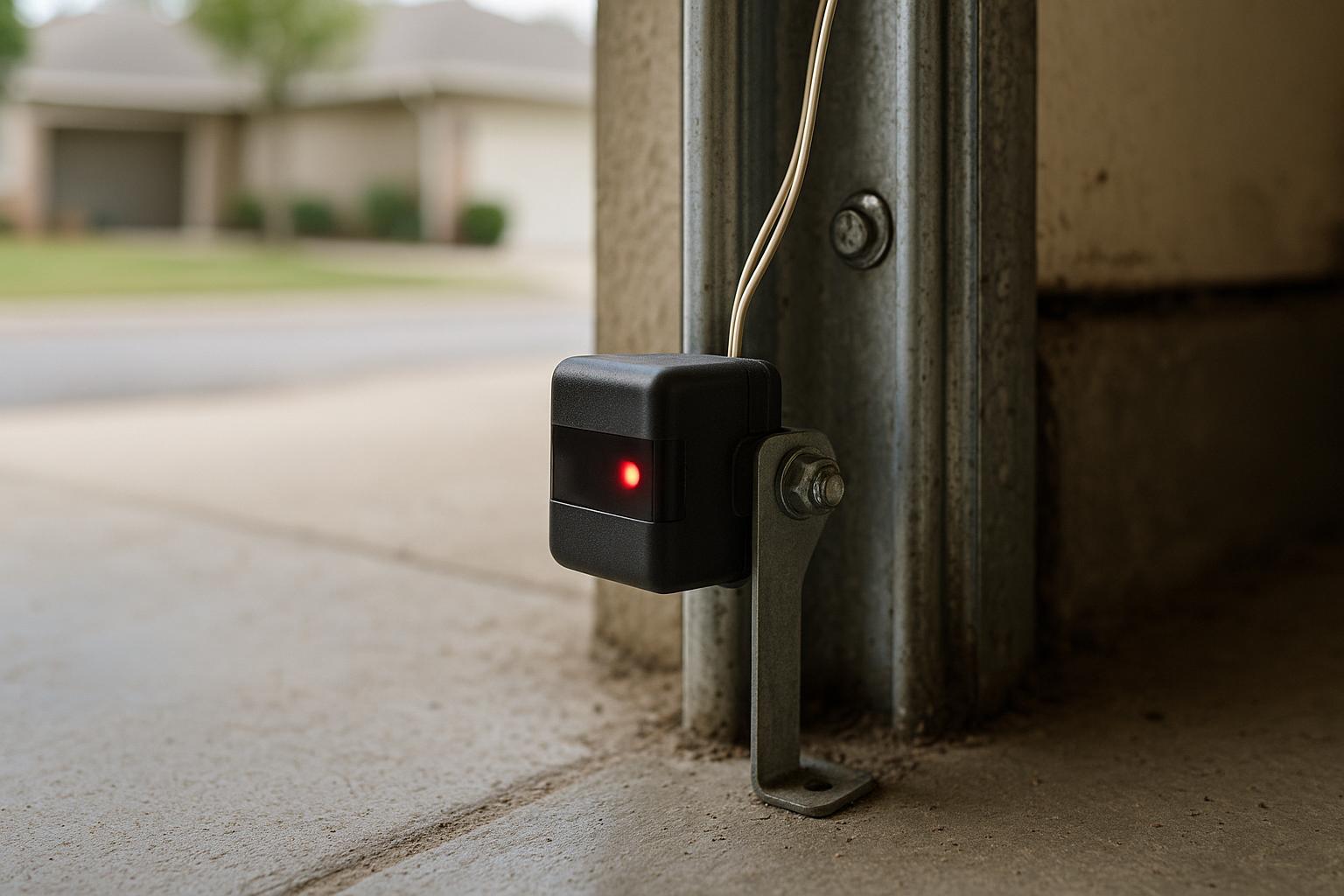
- Photo-eye sensors: Two small sensors mounted near the bottom of your garage door tracks that send an invisible beam across the opening. If something breaks the beam, the door reverses.
- Auto-reverse mechanism: If the door encounters physical resistance while closing, it automatically reverses to prevent crushing objects, pets, or people.
These features are critical for safety. The problem isn't that your door reverses — it's that it reverses when there's no actual obstruction. Something is triggering the safety system unnecessarily.
Common Cause #1: Misaligned Photo-Eye Sensors
This is the number one reason garage doors reverse unexpectedly. The photo-eye sensors on either side of your garage door opening need to be precisely aligned to maintain their infrared beam. If one sensor gets bumped, shifted, or even slightly tilted, the system interprets the broken beam as an obstruction and reverses the door.
How to Check
Look at both sensors near the floor on each side of the door. Most sensors have a small LED light. If one light is blinking rather than staying solid, the sensors are likely misaligned. Gently adjust the sensor that's blinking until the light becomes steady. Make sure both sensors are pointing directly at each other.
Other Sensor Issues
- Dirty lenses: Dust, cobwebs, or grime on the sensor lens can block the beam. A quick wipe with a soft cloth often solves the problem.
- Sun interference: Direct sunlight hitting a sensor can overwhelm the infrared beam, especially during certain times of day. This is a common issue we see in homes throughout the Dayton area where garage doors face west.
- Damaged wiring: The thin wires running from your sensors to the opener can get nicked, frayed, or disconnected over time.
Common Cause #2: Incorrect Close-Limit Settings
Your garage door opener has adjustable settings that tell it how far the door should travel before it's considered fully closed. If the close-limit setting is off, the opener may think the door has hit something when it's actually just reaching the ground. The opener interprets the normal resistance of the floor as an obstruction and reverses.
Most openers have adjustment screws or a digital control panel where you can fine-tune the travel distance. Check your owner's manual for specific instructions. Small adjustments — usually just a quarter turn at a time — can make a big difference.
Common Cause #3: Worn or Damaged Rollers and Tracks
If your garage door rollers are worn out, rusted, or broken, they create extra friction as the door moves along the tracks. Bent or misaligned tracks cause similar problems. The opener senses this added resistance and triggers the auto-reverse, thinking something is blocking the door.
Walk along both tracks and look for visible bends, dents, or debris. Listen for grinding or scraping sounds when the door moves. Worn nylon rollers often develop flat spots, while steel rollers can rust and seize up, especially after harsh Ohio winters.
Common Cause #4: Broken or Weakening Springs
Your garage door springs do the heavy lifting — literally. They counterbalance the weight of the door so the opener doesn't have to work as hard. When springs weaken or break, the door becomes significantly heavier, and the opener struggles to control its descent. This extra strain can trigger the reversal mechanism.
Important: Garage door springs are under extreme tension and are dangerous to repair or replace on your own. If you suspect a spring issue, this is the time to call a professional. We handle spring replacements regularly for homeowners in Huber Heights, Vandalia, Tipp City, and the surrounding communities.
Common Cause #5: Problems With the Opener Itself
Sometimes the issue isn't mechanical — it's the opener. Garage door openers have a force setting that determines how much resistance triggers a reversal. If the force setting is too low, the opener will reverse at the slightest resistance, even the normal weight of the door touching the ground.
Additionally, older openers can develop logic board issues or worn gears that cause erratic behavior. If your opener is more than 15 years old and you're experiencing repeated problems, it may be more cost-effective to replace it rather than continue repairing it.
Quick Troubleshooting Checklist
Before calling for service, try these steps in order:
- Check for obvious obstructions in the door's path
- Clean both photo-eye sensor lenses with a soft cloth
- Verify both sensor LED lights are solid (not blinking)
- Gently realign sensors if needed
- Check tracks for debris, bends, or visible damage
- Listen for unusual grinding or scraping sounds during operation
- Test the door in manual mode by pulling the emergency release cord — if the door is hard to move by hand, there's likely a spring or track issue
If none of these steps resolve the problem, or if you notice a broken spring or significant track damage, it's time to bring in a professional.
When to Call a Professional
Some garage door issues are straightforward enough for a handy homeowner to address. Sensor alignment and cleaning fall into that category. But anything involving springs, cables, track realignment, or opener repair should be handled by an experienced technician. These components are under significant tension and can cause serious injury if handled improperly.
At Huber Heights Garage Door, we diagnose reversal issues quickly because we've seen them hundreds of times. Whether it's a simple sensor adjustment or a full spring replacement, we show up on time and fix it right the first time. We serve homeowners across Huber Heights, Dayton, Englewood, Troy, and the entire Miami Valley area.
Don't Ignore a Reversing Garage Door
A garage door that won't close properly is more than an inconvenience — it's a security vulnerability. An open garage is an invitation for theft, pests, and weather damage. It also puts extra wear on your opener every time it cycles unnecessarily.
If your garage door keeps reversing and you can't pinpoint the cause, give us a call. We'll get it sorted out so you can get back to pressing the button once and walking away with confidence.