
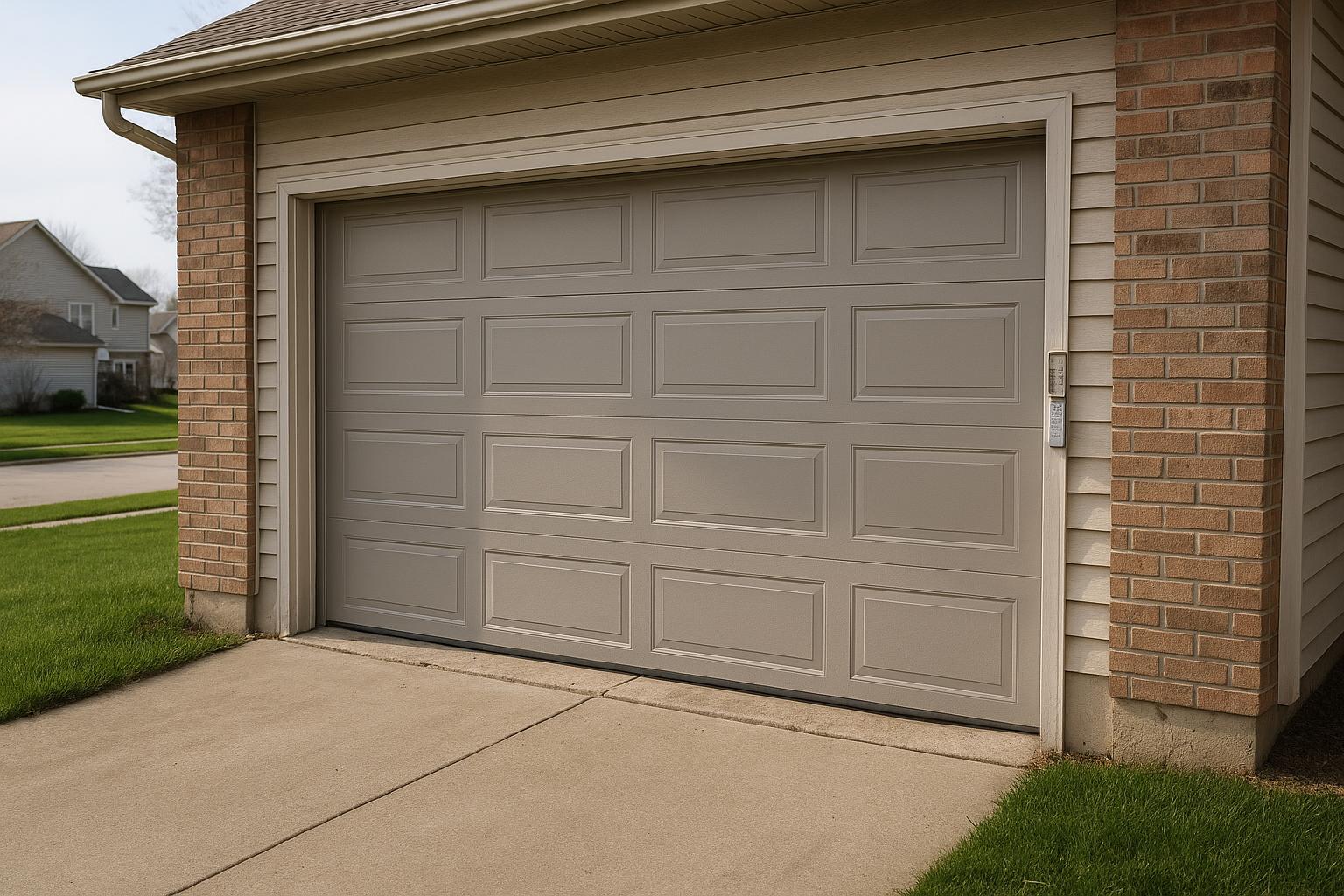
Your Garage Door Might Be Your Home's Biggest Vulnerability
Most homeowners in Huber Heights think about their front door locks, window latches, and maybe a security camera when it comes to protecting their home. But there's one entry point that often gets overlooked — the garage door. It's the largest moving part of your house and, for many families, the most frequently used entrance. If your garage door is outdated, damaged, or improperly secured, it could be an open invitation to intruders.
The good news is that identifying and fixing garage door security risks is straightforward once you know what to look for. Here's how to evaluate whether your garage door is keeping your family safe — or putting them at risk.
1. Your Garage Door Doesn't Close All the Way
A garage door that leaves a gap at the bottom — even just a few inches — is a serious security concern. That gap can allow someone to use a tool or even their hands to pry the door open from the outside. Beyond security, gaps also let in pests, moisture, and cold air, which is especially problematic during Ohio winters.
Common causes of a garage door that won't fully close include:
- Misaligned or dirty safety sensors
- Worn or damaged weatherstripping
- Track obstructions or bent tracks
- Incorrect limit switch settings on the opener
If your door consistently stops short of the ground, don't ignore it. A professional inspection can pinpoint the issue and restore a proper seal.
2. You're Still Using an Old Garage Door Opener
Garage door openers manufactured before the mid-2000s often use fixed-code technology. This means the remote sends the same radio signal every time you press the button. Thieves with inexpensive code-grabbing devices can intercept that signal and replay it to open your garage door when you're not home.
Modern garage door openers use rolling code technology, which generates a new, unique code every time the remote is activated. This makes it virtually impossible for someone to duplicate your signal. If your opener is more than 15 to 20 years old, upgrading isn't just about convenience — it's a meaningful security improvement.
3. Your Emergency Release Can Be Exploited
Every garage door with an automatic opener has an emergency release cord — that red handle hanging from the track. It's designed to let you open the door manually during a power outage. Unfortunately, burglars know about it too. Using a simple wire or coat hanger slipped through the top of the door, they can pull that cord and disengage the opener, allowing them to lift the door by hand in seconds.
There are a few ways to address this vulnerability:
- Install a garage door shield — a zip-tie or plastic shield that blocks access to the emergency release from outside
- Use a deadbolt lock on the interior door between your garage and your home as a secondary line of defense
- Upgrade to a door with tighter panel seals that make it harder to insert tools from outside
This is one of the most commonly exploited garage door weaknesses, and many Huber Heights homeowners don't realize how easy it is to address.
4. Your Door Panels Are Thin, Damaged, or Deteriorating
Older single-layer garage doors — especially those made from thin steel or aluminum — can be surprisingly easy to force open. Dents, cracks, and rust weaken the structure further. A determined intruder may be able to kick through a deteriorating panel or bend it enough to squeeze through.
If your garage door panels are visibly damaged, warped, or rusting through, it's time to consider whether a repair or full replacement makes more sense. Modern insulated garage doors with double or triple-layer construction are significantly more durable and resistant to forced entry.
5. You Don't Have a Lock on the Interior Door
Many homeowners treat the door between the garage and the house as an interior door — no deadbolt, sometimes not even a functioning lock. But if someone gains access to your garage, that flimsy door is the only thing standing between them and the inside of your home.
At a minimum, the door connecting your garage to your living space should have:
- A solid-core construction (not a hollow interior door)
- A quality deadbolt lock
- A door frame that's reinforced and in good condition
This is an inexpensive upgrade that dramatically improves your home's overall security.
6. Your Garage Door Has No Smart Monitoring
Have you ever left for work and wondered whether you closed the garage door? You're not alone. An open garage door in the middle of the day is one of the most common ways homes are burglarized — and it's entirely preventable.
Smart garage door openers and monitoring systems let you:
- Check whether your door is open or closed from your phone
- Receive alerts if the door has been open for a set period of time
- Close the door remotely from anywhere
- Set schedules to automatically close the door at certain times
For families in the Huber Heights and Dayton area who are frequently coming and going, smart garage door technology offers peace of mind without a major investment.
7. Your Garage Door Keypad Code Hasn't Been Changed in Years
If you have an exterior keypad for your garage door, when was the last time you changed the access code? If the answer is "never" or "I can't remember," it's time for an update. Over the years, that code may have been shared with neighbors, contractors, babysitters, or previous homeowners. Changing it takes less than five minutes and eliminates a potential security gap.
As a best practice, update your keypad code every six months and avoid using obvious combinations like birthdays or sequential numbers.
Take Action Before There's a Problem
Garage door security isn't something most people think about until something goes wrong. But taking a few proactive steps — upgrading an outdated opener, reinforcing your interior door, or simply changing your keypad code — can make a significant difference in how well your home is protected.
If you're a homeowner in Huber Heights or the surrounding Dayton area and you're not sure whether your garage door is as secure as it should be, we can help. At Huber Heights Garage Door, we offer thorough inspections, opener upgrades, and full garage door replacements to make sure your home is safe, functional, and secure. Give us a call to schedule an assessment — we'll identify any vulnerabilities and walk you through your options so you can make the best decision for your family.