
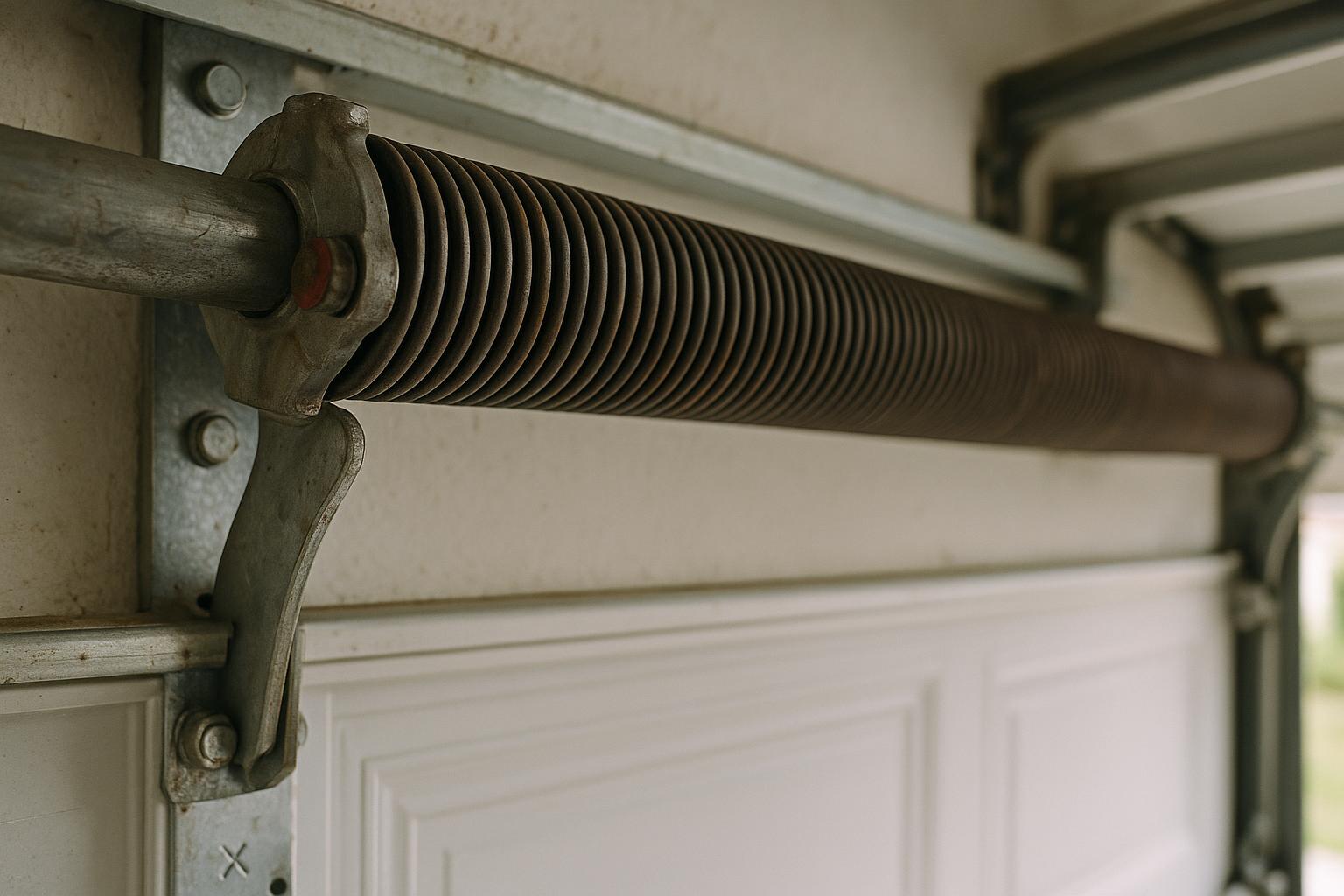
Your Garage Door Springs Are Working Harder Than You Think
Every time you open and close your garage door, the springs do the heavy lifting — literally. A standard residential garage door can weigh anywhere from 130 to 350 pounds, and without properly functioning springs, your opener alone can't handle that load. Yet most homeowners in Huber Heights and the surrounding Dayton area never think about their garage door springs until something goes wrong.
A broken spring isn't just an inconvenience. It can leave your car trapped inside the garage, damage your opener, or even pose a serious safety risk. Understanding how long springs last and recognizing the warning signs of wear can save you from an unexpected — and potentially dangerous — failure.
How Long Do Garage Door Springs Typically Last?
The lifespan of a garage door spring is measured in cycles. One cycle equals one full open and one full close of the door. Most standard torsion springs are rated for approximately 10,000 cycles, while high-cycle springs can be rated for 25,000 to 50,000 cycles or more.
So how does that translate to years? It depends on how often you use your garage door:
- 2 cycles per day (once out, once in): A standard spring lasts roughly 13-14 years.
- 4 cycles per day (common for busy families): Expect around 7 years of life.
- 6-8 cycles per day (home businesses, multiple drivers): Springs may only last 3-5 years.
If you've lived in your Huber Heights home for a decade or more and have never replaced the springs, it's worth having them inspected — especially if you use the garage as your primary entry point, which many families in our area do.
Torsion Springs vs. Extension Springs: What's the Difference?
There are two main types of garage door springs, and each has different characteristics when it comes to lifespan and replacement:
Torsion Springs
Torsion springs are mounted on a metal shaft directly above the garage door opening. They use torque to lift the door and are the more common type found in modern residential installations. Torsion springs tend to last longer, offer smoother operation, and are generally considered safer. Most homes built in the Huber Heights and Vandalia area in the last 20 years use torsion spring systems.
Extension Springs
Extension springs run along the horizontal tracks on both sides of the door. They stretch and contract to provide lifting force. These springs are more common in older homes and lighter doors. They typically have a shorter lifespan and can be more dangerous when they break because they're under significant tension and can snap violently if not equipped with safety cables.
Regardless of which type your garage door uses, both will eventually wear out and need replacement. The key is catching the problem before a complete failure.
Warning Signs Your Garage Door Springs Are Wearing Out
Springs rarely fail without some advance warning. Here are the signs every homeowner should watch for:
- The door feels heavier than usual. If your garage door seems harder to lift manually or your opener is straining, the springs are likely losing tension.
- The door doesn't stay open. A properly balanced door should stay in place when opened halfway. If it slides down, the springs may be weakening.
- You hear loud squeaking or grinding. While some noise is normal, excessive squeaking from the spring area can indicate metal fatigue or a lack of lubrication.
- Visible gaps in the spring coils. A torsion spring that's about to break will often show a visible gap or separation between coils.
- The door opens unevenly. If one side of the door rises faster than the other, one spring may be weaker or broken — especially common with extension spring setups.
- You heard a loud bang from the garage. If you heard what sounded like a gunshot or firecracker coming from your garage, a spring has likely already snapped. This is the most obvious sign, and it means you need professional help immediately.
Why You Should Never Replace Garage Door Springs Yourself
We understand the DIY spirit — it's strong among homeowners here in Huber Heights and throughout the Dayton area. But garage door spring replacement is one job that should always be left to trained professionals. Here's why:
- Extreme tension. Torsion springs are wound under tremendous force. A spring that releases unexpectedly can cause severe injuries or even death.
- Specialized tools required. Proper spring replacement requires winding bars, vice grips, and precise calibration tools that most homeowners don't have.
- Incorrect installation causes more damage. Springs that are improperly sized or wound can damage your garage door opener, bend tracks, or cause the door to fall.
- Warranty concerns. Many garage door and opener manufacturers void warranties if repairs are performed by unlicensed individuals.
A professional technician can replace your springs safely in about an hour, properly balance the door, and ensure everything is operating the way it should.
Should You Replace One Spring or Both?
This is one of the most common questions we hear from customers in Tipp City, Troy, Englewood, and across our service area. If only one spring has broken, is it worth replacing both?
Our recommendation: always replace both springs at the same time.
Here's the reasoning. If one spring has reached the end of its lifespan, the other spring has endured the exact same number of cycles and is likely close to failure as well. Replacing both springs at once saves you from a second service call in the near future, ensures even tension and balanced operation, and is more cost-effective than two separate repair visits.
How Regular Maintenance Extends Spring Life
While springs will eventually wear out no matter what, regular maintenance can significantly extend their useful life. A few simple practices make a real difference:
- Lubricate the springs twice a year. Use a silicone-based or lithium-based garage door lubricant on the coils. This reduces friction and prevents rust, which weakens the metal over time.
- Schedule annual professional inspections. A trained technician can spot early signs of wear, check spring tension, and balance the door before small problems become big ones.
- Keep the door balanced. An unbalanced door puts extra stress on springs and the opener. If your door doesn't stay put when opened halfway, it's time for an adjustment.
- Minimize unnecessary cycles. If your kids are using the garage door as a toy, it's adding wear. Every cycle counts toward the spring's total lifespan.
Homeowners in Huber Heights deal with significant temperature swings between summer and winter, and those fluctuations cause metal to expand and contract repeatedly. This makes regular lubrication and inspection even more important in our climate.
Don't Wait for a Broken Spring to Take Action
A broken garage door spring always seems to happen at the worst possible time — when you're running late for work, loading up for a family trip, or dealing with a winter storm. The good news is that proactive replacement is quick, affordable, and far less stressful than an emergency repair.
If your garage door springs are more than seven years old, if you've noticed any of the warning signs mentioned above, or if you simply can't remember the last time they were inspected, now is the time to act. At Huber Heights Garage Door, we provide fast, professional spring replacement and maintenance services to keep your door running safely and smoothly. We serve homeowners and businesses throughout Huber Heights, Dayton, Vandalia, Tipp City, Troy, and Englewood — and we always show up on time to get the job done right.